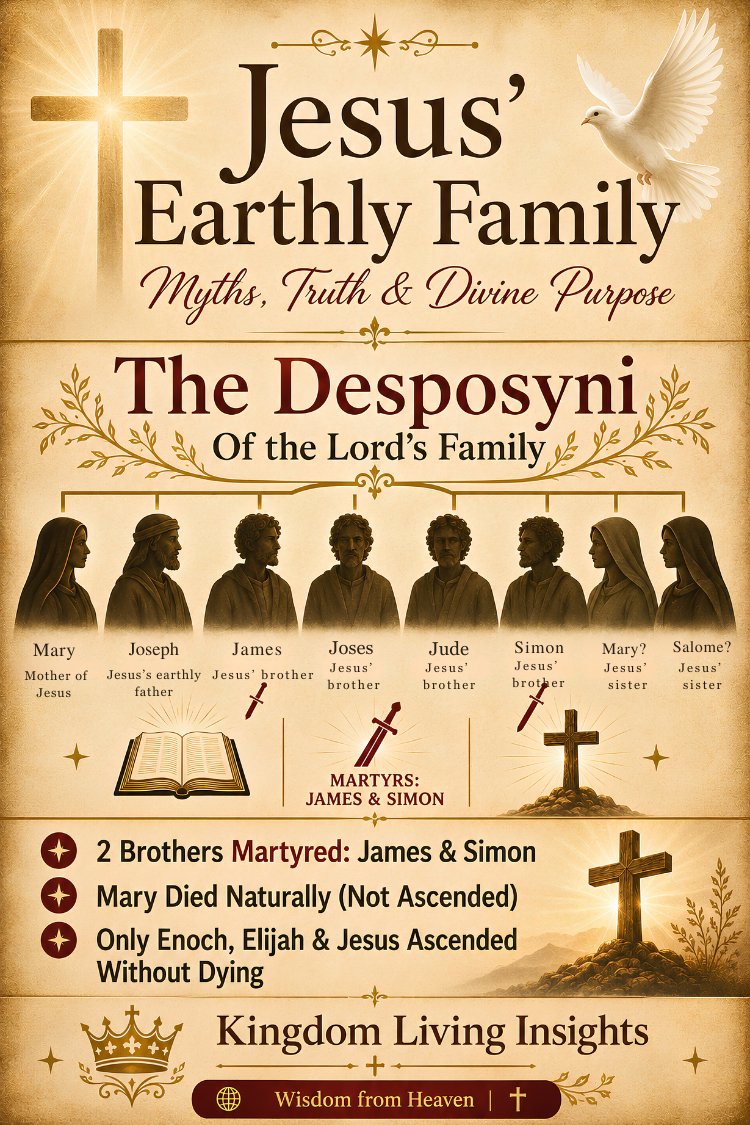
When we think of Jesus, we often picture Him alone – preaching, healing, dying on the cross. But Jesus wasn’t isolated. He grew up in a real family with a mother, father, brothers, and sisters. This earthly family shaped His human experience, yet much about them has been obscured by centuries of myth and theological debate.
The Major Myths About Jesus’ Family
Myth 1: Mary Remained Perpetually Virgin
The Catholic doctrine of Mary’s perpetual virginity claims Mary had no children after Jesus. This teaching originated in the 2nd century and was formally defined at the Second Council of Constantinople in the 6th century.
The Biblical Truth: Matthew 13:55-56 and Mark 6:3 explicitly name Jesus’ four brothers: James, Joseph (Joses), Simon, and Judas (Jude). They also mention “sisters” (unnamed). Paul never mentions Mary or siblings, but the Gospels of Mark and Matthew explicitly name them.
The Greek word adelphoi (brothers) overwhelmingly means biological brothers in these contexts. Early theologians like Jerome later reinterpreted this as “cousins” to support perpetual virginity, but this was linguistic sleight-of-hand, not Scripture-based.
Myth 2: Jesus’ “Brothers” Were Actually Cousins
The Hieronymian View (named after St. Jerome) claims the brothers were Mary’s cousins or relatives. The Epiphanian View (named after St. Epiphanius of Salamis) claims they were Joseph’s children from a previous marriage.
The Biblical Truth: These theories emerged to support theological doctrines, not from biblical evidence. Matthew 13:55-56 identifies them as the builder’s sons in their hometown context. The townspeople clearly understood these were Joseph and Mary’s children.
Myth 3: Jesus’ Brothers Were Step-Brothers
The Eastern Orthodox tradition teaches that Jesus’ “brothers” were actually Joseph’s step-sons from a previous marriage (Joseph was widowed and elderly).
The Biblical Truth: This is another tradition developed to support perpetual virginity. The Bible clearly calls them “his brothers” (Matthew 13:55-56, Mark 6:3) and Jesus as “the brother of James, Joseph, Judas and Simon” (Mark 6:3).
Myth 4: Jesus’ Family Was Ignored or Disappeared Immediately
Some believe Jesus’ family was unnoticed in the Early Church and quickly disappeared.
The Biblical Truth: James, Jesus’ brother, became the leader of the Jerusalem church for 30 years and wrote the Book of James. Other family members continued exercising leadership in Palestinian Jewish Christianity down to at least the early second century. His grandsons survived persecution and lived until the reign of Trajan (98-117 AD).
Myth 5: Jesus’ Family Was Erased Only Because of Roman Wars
Many believe the Roman destruction of Jerusalem (70 AD) simply wiped out Jesus’ family.
The Biblical Truth: While Roman wars devastated Jewish Christianity, the Desposyni were systematically erased through multiple processes:
-
Physically displaced by Roman wars (66-70 AD, 130-135 AD)
-
Legally and militarily suppressed by Rome to prevent rebellion
-
Theologically erased by Catholic Church removing Jesus’ bloodline importance
-
Succession replaced with Greek bishops instead of Desposyni patriarchs
-
Doctrines invented (perpetual virginity, cousins theory) to deny blood relatives
The Desposyni weren’t just “wiped out” – they were systematically murdered and erased from church history.
Myth 6: Peter Was the First Leader of the Jerusalem Church
Modern church teaching claims Peter founded and led the Jerusalem church.
The Biblical Truth: James (Jesus’ brother) led Jerusalem church for 30 years before Peter became prominent. Peter left Jerusalem after Herod’s attempt to kill him (Acts 12). James presided at the Council of Jerusalem (Acts 15), not Peter.
Myth 7: The Brothers Never Believed
Some teach that Jesus’ brothers remained skeptical and never became Christians.
The Biblical Truth: While they initially didn’t believe during Jesus’ ministry (John 7:5), they became believers after seeing the risen Christ (1 Corinthians 15:7). James became the church leader, both wrote Scripture, and traveled as evangelists.
Myth 8: Mary the Mother of Jesus Was Ascended to Heaven Without Dying
Some Catholic and popular traditions claim Mary was “assumed” or “ascended” into heaven without experiencing death, similar to Jesus.
The Biblical Truth :There is NO biblical record of Mary being ascended. The Bible does not teach that Mary avoided death. Like all humans since Adam, Mary died naturally (Romans 5:12, “death through sin passed on all men”). The Catholic doctrine of Mary’s Assumption (that she was taken bodily into heaven without dying) was officially declared in 1950 by Pope Pius XII, but it has no basis in Scripture.
Three people in the Bible ascended without dying:
-
Enoch – Enoch walked with God, and he was not found, for God took him. (Genesis 5:24 WEB). He was translated/ascended without experiencing death [Hebrews 11:5]
-
Elijah – Taken up to heaven in a whirlwind (2 Kings 2:11). He ascended bodily without dying
-
Jesus – Rose bodily from the dead and ascended to heaven (Acts 1:9-11). He is the ONLY one who rose from death and ascended
Mary was NOT one of these three – she died naturally like all other humans since Adam. Mary needed salvation like everyone else (Luke 1:47 WEB, “My spirit has rejoiced in God my Savior,”). Mary is a servant of God, not divine.
The Sacred Name of Jesus’ Family: The Desposyni
Jesus’ earthly family had a special sacred name: The Desposyni (Greek: δεσπόσυνοι).
Meaning:
-
From Greek δεσπόσυνοι (despósunoi), plural of δεσπόσυνος (despósunos)
-
Means “belonging to the Master/Lord” or “of the Lord’s family”
-
Some sources say it means “Heir of the Lord”
Who They Were:
-
Jesus’ blood relatives through His mother Mary
-
This was the sacred name reserved only for Jesus’ actual family
Historical Significance:
-
The early Christian historian Sextus Julius Africanus (c. 160–240 AD) referred to “relatives of our Lord according to the flesh” as Desposyni
-
They held positions of special honor in the Early Christian Church
-
Every early Judean community of Jesus followers was governed by a desposynos as patriarch
-
All male Desposyni could claim both the throne of David and the office of high priest of Jerusalem
Jesus’ Definition of Family: Spiritual Family Over Earthly Family
Jesus radically redefined what “family” means. While He loved and honored His earthly family, He taught that spiritual family in Christ is primary.
Jesus’ Definition of Family:
1. Those Who Obey God Are My True Family
But he answered him who spoke to him, “Who is my mother? Who are my brothers?” He stretched out his hand toward his disciples, and said, “Behold, my mother and my brothers! For whoever does the will of my Father who is in heaven, he is my brother, and sister, and mother.” Matthew 12:48-50 (WEB)
This is the KEY passage where Jesus defines family:
-
Jesus asks: “Who is my mother? Who are my brothers?”
-
He stretches out His hand toward His disciples
-
He declares: “Here are my mother and my brothers!”
-
The definition: “Whoever does the will of my Father in heaven is my brother and sister and mother”
Key Point: Jesus does NOT say “my biological family.” He says “whoever does the will of God” is His true family.
Family is defined by obedience to God, not by bloodline.
2. Spiritual Family Transcends Biological Family
Do you think that I have come to give peace in the earth? I tell you, no, but rather division. For from now on, there will be five in one house divided, three against two, and two against three. They will be divided, father against son, and son against father; mother against daughter, and daughter against her mother; mother-in-law against her daughter-in-law, and daughter-in-law against her mother-in-law.” Luke 12:51-53 (WEB)
Jesus reveals that following Him will divide biological families. Some will believe, some won’t. Spiritual loyalty to Christ overrides biological loyalty.
3. Leaving Biological Family for Christ
He said to them, “Most certainly I tell you, there is no one who has left house, or wife, or brothers, or parents, or children, for God’s Kingdom’s sake, who will not receive many times more in this time, and in the world to come, eternal life.” Luke 18:29-30 (WEB)
Jesus teaches that leaving biological family for the Kingdom is required and rewarded.
4. The New Birth Creates New Family
But as many as received him, to them he gave the right to become God’s children, to those who believe in his name: who were born, not of blood, nor of the will of the flesh, nor of the will of man, but of God. John 1:12-13 (WEB)
We become God’s children not by blood but by new birth from God.
5. One Family in Christ
For as many of you as were baptized into Christ have put on Christ. There is neither Jew nor Greek, there is neither slave nor free man, there is neither male nor female; for you are all one in Christ Jesus. If you are Christ’s, then you are Abraham’s offspring and heirs according to promise. Galatians 3:27-29 (WEB)
In Christ, we are all one family – Abraham’s seed, heirs of promise, regardless of biology.
6. The Church is God’s Household
These things I write to you, hoping to come to you shortly, but if I wait long, that you may know how men ought to behave themselves in God’s house, which is the assembly of the living God, the pillar and ground of the truth.1 Timothy 3:14-15 (WEB)
The Church is called God’s household or house. This is our true family.
Jesus’ Definition Summarized:
| Earthly Family |
Spiritual Family (TRUE Family) |
| Based on bloodline |
Based on obedience to God’s will |
| Temporary |
Eternal |
| Biological connection |
New birth from God [John 1:13] |
| Can divide believers from non-believers |
Unites all believers [Galatians 3:28] |
| Must be left for Christ’s sake |
Receives reward [Luke 18:29-30] |
| James, Jude, Simon, Joses, sisters |
All disciples, believers, Kingdom people |
Jesus’ Point: Your biological family (brothers, sisters, mother) is NOT your primary identity. Your true family is everyone who does the will of God.
This explains why Jesus chose John (a believer) to care for Mary instead of His brothers (who weren’t believers yet) at the cross.
The Names and Identity of Jesus’ Family
Parents:
-
Mary (Miriam): His mother, a young Jewish woman from Nazareth
-
Joseph: His father, a builder/craftsman (tekton) from Bethlehem
Brothers (named in Scripture):
-
James (Yakov): Became leader of the Jerusalem church; wrote the Book of James
-
Joseph/Joses: Mentioned in Matthew 13:55 and Mark 6:3
-
Simon: Listed among the brothers
-
Judas/Jude: Wrote the Book of Jude; not to be confused with Judas Iscariot
Sisters:
-
At least two unnamed sisters (mentioned in Matthew 13:56, Mark 6:3)
The Royal Lineage: House of David
Jesus’ family also belonged to the House of David (also called the Davidic line or Davidic dynasty).
The word “dynasty” comes from the Greek “dynasteia” (δυναστεία), meaning “power, lordship, sovereignty”.
Through Joseph’s adoptive fatherhood, Jesus inherited the royal claim to David’s throne. Joseph was from the House of David, and legally passed on to Him the right to the throne.
This royal dynasty fulfilled prophecy: Jesus was the messianic Son of David, the promised King who would reign forever (2 Samuel 7:12-16).
The Clear Bible Evidence: Joseph and Mary Had Other Children
Matthew 13:55-56 (WEB) – This passage makes it undeniably clear that Joseph and Mary had multiple children:
Isn’t this the carpenter’s son? Isn’t his mother called Mary, and his brothers James, Joses, Simon, and Judas? Aren’t all of his sisters with us? Where then did this man get all of these things?”
This verse does four things:
-
Names Joseph as the builder/craftsman (tekton – Jesus’ father)
-
Names Mary as the mother
-
Lists four specific brothers by name: James, Joses, Simon, and Judas
-
Mentions sisters (plural, unnamed) living in the same community
The context makes it clear these are Joseph and Mary’s children, not cousins or step-siblings. The townspeople are asking, “Where did this man get all these things?” because they know His entire family – parents, brothers, and sisters – grew up right there in Nazareth.
Mark 6:3 (WEB) confirms this:
Isn’t this the carpenter, the son of Mary and brother of James, Joses, Judah, and Simon? Aren’t his sisters here with us?” So they were offended at him.
Notice: Mark says “son of Mary” (not Joseph’s son) because Joseph had likely died by this time, but still clearly identifies the brothers and sisters as His family.
Matthew 1:25 (WEB) about Joseph and Mary:
and didn’t know her sexually until she had given birth to her firstborn son. He named him Jesus.
The word “firstborn” (Greek: prototokos) implies there were subsequent children. If Mary had only one child, the Bible would say “only child” or “only son.” The term “firstborn” is used because James, Joses, Simon, Judas, and the sisters came after Jesus.
Why Jesus Chose John to Care for His Mother
This is one of the most profound moments at the cross (John 19:26-27). When Jesus said, “Woman, behold your son!” to Mary and “Behold your mother!” to John, He was fulfilling a divine responsibility.
The Surprising Choice:
We might expect Jesus’ brothers (especially James, the oldest after Jesus) to care for Mary. But Jesus chose John, the apostle, instead. Why?
Three Biblical Reasons:
-
Faith Difference: At the time of Jesus’ crucifixion, His brothers were not believers. Jesus was entrusting Mary to John, who was a believer and present, rather than to His brothers who weren’t yet believers.
-
Presence at the Cross: John was the only apostle who stood with Jesus at the cross. The other disciples had fled. John’s presence made him the natural choice.
-
The Beloved Disciple: John is “the disciple whom Jesus loved” (mentioned six times in John’s Gospel). This intimate relationship made him uniquely qualified to care for Jesus’ mother.
What Happened After:
Early Christian tradition holds that John took Mary to Ephesus, where she lived with him until her death. Some traditions say she lived there for about 11-17 years. This fulfilled Jesus’ final act of care for His mother before His death.
Interestingly, John later wrote Jesus’ entire Gospel from Ephesus, possibly with Mary still living there or having recently died. This connection between Mary, John, and Ephesus is deeply significant in Early Church history.
What Each Family Member Did and What Happened to Them
Mary (Mother of Jesus) – DIED PEACEFULLY (Not Ascended)
What She Did:
-
Conceived Jesus by the Holy Spirit (Matthew 1:20, Luke 1:35)
-
Journeyed to Bethlehem for Jesus’ birth
-
Fled to Egypt to protect Jesus from Herod
-
Raised Jesus in Nazareth with Joseph
-
Present at Jesus’ crucifixion
-
Joined the disciples in the Upper Room after resurrection (Acts 1:14)
-
Taught Jesus as a child (Luke 2:40-51)
- Noticed they had no wine at a wedding in Cana and told Jesus about it (John 2:1-3)
- Told the servants “Whatever he says to you, do it.” when wine ran out (John 2:5)
- Jesus’ first miracle was turning water into wine at her request (John 2:6-11)
- Called herself “the servant of the Lord” (Luke 1:38)
- Needed salvation like everyone else (Luke 1:47, “my Savior”)
What Happened to Her – DIED PEACEFULLY (Not Ascended):
-
After Jesus’ death, John the Apostle took her to Ephesus (John 19:26-27)
-
Tradition says she lived in Ephesus for 11-17 years until her death
-
John wrote his Gospel from Ephesus, possibly with Mary still living there
-
Her death date is unknown, but tradition places it around 41-48 AD
-
She died naturally – NOT ascended like Jesus, Enoch, or Elijah ⚠️
-
No biblical record of ascension – this is Catholic doctrine declared in 1950 without Scripture basis
-
Mary is not divine – she was a servant who needed salvation
-
Three people in the Bible ascended without dying:
-
Enoch – Genesis 5:24, Hebrews 11:5 (God took him)
-
Elijah – 2 Kings 2:11 (taken in whirlwind)
-
Jesus – Acts 1:9-11 (rose from death and ascended)
-
Mary was NOT one of these three
-
Mary died naturally like all humans since Adam (Romans 5:12)
⚠️ IMPORTANT: Mary was NOT ascended. Only Enoch, Elijah, and Jesus ascended without dying. Mary died naturally.
Joseph (Father of Jesus) – DIED PEACEFULLY
What He Did:
-
Builder/Craftsman/Construction Worker (Greek: tekton) from Bethlehem
-
NOT just a carpenter – tekton means builder/craftsman who worked with wood, stone, and multiple building materials
-
In 1st-century Judea, stone was more common than wood for building
-
Joseph was likely a general builder who worked with multiple materials – wood, stone, possibly metal
-
Married Mary despite her miraculous pregnancy
-
Named Jesus as instructed by angel
-
Took family to Egypt for safety
-
Raised Jesus in Nazareth
-
Present at Jesus’ childhood temple visit (age 12)
-
Taught Jesus the building/craftsmanship trade (Jesus also became a tekton)
What Happened to Him:
-
Fades from Scripture after Jesus’ age 12
-
Assumed to have died before Jesus’ ministry began (Jesus is called “son of Mary” not “son of Joseph”)
-
Traditional church teaching: Joseph died peacefully before Jesus began His public ministry
-
Likely died around 18-25 AD (Jesus was 30+ when ministry began)
-
No record of his death or martyrdom
-
He died naturally, not as a martyr
James (Brother of Jesus) – “The Just” – MARTYRED 62 AD
What He Did:
-
Initially didn’t believe in Jesus during His ministry (John 7:5)
-
Believed after seeing risen Jesus (1 Corinthians 15:7)
-
Became leader of the Jerusalem church
-
Called “James the Just” because of his outstanding virtue
-
Presided at the Council of Jerusalem (Acts 15)
-
Made decision that Gentile Christians don’t need to follow all Jewish laws
-
Wrote the Epistle of James (“most Jewish text in New Testament”)
-
Lived ascetically: no wine, meat, no razor on head, wore only linen
-
Prayed so much his knees became “like a camel’s”
-
Called “bishop of Jerusalem” by apostles
-
Ruled Jerusalem church for 30 years
-
Was known as the most righteous man in Jerusalem
-
Gained reputation for holiness – even Jews prayed for his intercession
What Happened to Him – KILLED BECAUSE HE DIDN’T DENY JESUS (MARTYRED):
-
Martyred in 62 AD for refusing to deny Jesus
-
High Priest Ananus and Jewish authorities demanded James deny Jesus publicly
-
Josephus records: High Priest Ananus assembled Sanhedrin and delivered James “to be stoned” for breaking Jewish law – specifically for refusing to deny Jesus as the Messiah
-
Eusebius/Hegesippus records: Thrown from temple pinnacle, survived fall, then clubbed to death with a fuller’s club
-
Ananus was removed from high priesthood after 3 months for this unjust killing
-
Eusebius says James’s murder caused divine vengeance leading to Jerusalem’s siege
-
James was 96 years old when martyred (Epiphanius)
-
He was killed specifically because he refused to deny Jesus even when pressured by Jewish authorities
-
Josephus called him “the brother of Jesus who was called Christ”
-
James died as a martyr for Christ – he would not deny his faith in Jesus despite the threat of death
JAMES WAS MARTYRED BECAUSE HE DIDN’T DENY JESUS AS MESSIAH
This is the key reason for his martyrdom: James refused to deny Jesus when Jewish authorities demanded he renounce His claim that Jesus was the Messiah. This shows his complete transformation from someone who initially didn’t believe (John 7:5) to someone who would die for his faith.
Jude/Judas (Brother of Jesus) – ??? UNKNOWN
What He Did:
-
Initially didn’t believe in Jesus during ministry
-
Became believer after resurrection
-
Wrote the Epistle of Jude (calls himself “servant of Jesus Christ, brother of James”)
-
Became respected church leader and traveling missionary
-
Warned Church about impostors infiltrating
-
Traveled as evangelist with other brothers of Jesus (1 Corinthians 9:5)
-
Was married (had a believing wife while traveling)
-
Got married and had children after becoming believer
What Happened to Him – UNKNOWN:
-
Traditional accounts vary:
-
Either crucified
-
Or clubbed to death and then sawed in half
-
But Bible/Historical record is unclear – no certainty
-
His grandsons survived: Two grandsons of Jude (Zoker and James) were informed against to Emperor Domitian (81-96 AD) but released and became Church leaders
-
Grandsons lived until reign of Trajan (98-117 AD)
-
Most likely: Died naturally or fled Jerusalem before 70 AD siege
-
We don’t know what happened to him – no reliable record
Simon (Brother of Jesus) – Simeon of Jerusalem – MARTYRED 107 AD
What He Did:
-
Named in Matthew 13:55 and Mark 6:3 as Jesus’ brother
-
Initially didn’t believe during Jesus’ ministry
-
Became believer after resurrection
-
Joined disciples in Upper Room (Acts 1:14)
-
Became second leader/bishop of Jerusalem church after James died
-
Called Simeon in Hegesippus
-
Hegesippus makes him son of Clopas (brother of Joseph), not Mary’s son in some traditions
-
Led Jerusalem church for 44 years (63-107 AD)
What Happened to Him – MARTYRED:
-
Martyred in 107 AD (or 106-107 AD) under Emperor Trajan
-
Emperor Trajan ordered death sentence for all Christian and Jewish people in Jerusalem
-
Simon was captured despite being elderly (age 120 in some accounts)
-
Bravely withstood wicked torture for several days
-
Crucified after undergoing tortures
-
Died with such patience that he drew universal admiration, even from Atticus (the proconsul) who condemned him
-
Commemorated April 27 in church calendar
-
Some sources identify him as Simon of Clopas, second bishop of Jerusalem
SIMON WAS MARTYRED LIKE JAMES
Joses/Joseph (Brother of Jesus) – ??? COMPLETELY UNKNOWN
What He Did:
-
Named in Matthew 13:55 and Mark 6:3 as Jesus’ brother
-
Second eldest brother after James
-
Initially didn’t believe during ministry
-
Became believer after resurrection
-
Joined disciples in Upper Room (Acts 1:14)
-
Traveled as evangelist with other brothers
-
Was married (had believing wife)
-
3rd century sources: Joseph/Joses may have been 2nd bishop of Jerusalem (but this is disputed – some say Simon)
What Happened to Him – COMPLETELY UNKNOWN:
-
I could find no traditional references to the death of Joseph (Joses)
-
Mystery: Dies completely from historical record
-
No martyrdom account like James, Jude, or Simon
-
Possibly died naturally or fled Jerusalem before 70 AD siege
-
No record of his fate – disappeared from history
-
We don’t know what happened to him – completely unknown
The Sisters (Unnamed) – ??? COMPLETELY UNKNOWN
What They Did:
-
At least 2 sisters mentioned in Matthew 13:56 and Mark 6:3
-
Number unknown
-
Initially associated with Jesus but not as followers during ministry
-
Joined disciples in Upper Room after resurrection (Acts 1:14)
-
Became believers after resurrection
-
Apocryphal Gospel of Philip: Names one sister as Mary
-
Gospel of James (2nd century): Names another as Salome
-
Traveled as evangelists with brothers
What Happened to Them – COMPLETELY UNKNOWN:
-
Disappear from history completely
-
No names (except in apocryphal texts as Mary and Salome)
-
No records
-
No martyrdom accounts
-
Possibly fled Jerusalem before 70 AD siege
-
Traditional accounts: May have married and had families that continued Desposyni line
-
We don’t know what happened to them – completely unknown
The Grandsons of Jude (Desposyni Continuation)
What They Did:
-
Names: Zoker and James (according to Bodleian Library notes)
-
Grandsons of Jude, Jesus’ brother
-
Informed against to Emperor Domitian (81-96 AD) as descendants of David and Christ
-
Accused of being threat to Roman rule
-
Released after interrogation
-
Became leaders of Churches as “martyrs and kindred of the Lord”
-
Lives prolonged to reign of Trajan (98-117 AD)
-
Bishop Judah Kyriakos (c. 148-49 AD): Only historically attested Desposyni by name
What Happened to Them:
-
Survived persecution but Desposyni line gradually disappeared
-
By 4th century, references to Desposyni disappear from records
-
Desposyni were erased through process:
-
Physically displaced by Roman wars (66-70 AD, 130-135 AD)
-
Legally and militarily suppressed
-
Theological erasure by Catholic Church removing Jesus’ bloodline importance
Summary: Who Was Killed and Who We Don’t Know
CERTAINLY MARTYRED/KILLED:
-
James (Brother of Jesus) – MARTYRED 62 AD
-
Thrown from temple pinnacle, survived, then clubbed to death
-
High Priest Ananus ordered stoning
-
Age 96 when killed
-
Simon/Simeon (Brother of Jesus) – MARTYRED 107 AD
-
Captured by Emperor Trajan’s forces
-
Tortured for several days
-
Crucified at age ~120
UNKNOWN FATE ???:
-
Jude/Judas (Brother of Jesus) – ??? UNKNOWN
-
Traditional accounts vary: crucified OR clubbed + sawed in half
-
No reliable record – we don’t know
-
Grandsons survived to 117 AD
-
Joses/Joseph (Brother of Jesus) – ??? COMPLETELY UNKNOWN
-
No traditional references to his death
-
Completely disappeared from history
-
We don’t know
-
The Sisters (Unnamed) – ??? COMPLETELY UNKNOWN
-
Disappear from history
-
No names, records, or martyrdom accounts
-
We don’t know
DIED PEACEFULLY (Not Martyred, Not Ascended):
-
Mary (Mother) – DIED PEACEFULLY (not martyred, not ascended)
-
Died around 41-48 AD in Ephesus
-
Died naturally like all humans
-
NOT ascended ⚠️ (only Enoch, Elijah, and Jesus ascended without dying)
-
Joseph (Father) – DIED PEACEFULLY (not martyred)
-
Died around 18-25 AD
-
No martyrdom
Summary: Only James and Simon Were Definitely Killed
The rest either died peacefully (Mary, Joseph) or we don’t know what happened to them (Jude, Joses, sisters).
Why Was Jesus’ Family Eradicated from History?
Jesus’ blood relatives (the Desposyni) were systematically erased from history for several reasons:
1. Political Power Conflict with Rome
-
Desposyni claimed both throne of David AND high priest office
-
This made them dual threats to Roman authority:
-
Royal claim to Jewish throne (Davidic dynasty)
-
Religious authority as high priests
-
Emperor Domitian (81-96 AD) specifically targeted Desposyni as “descendants of David” and potential revolutionaries
-
Rome murdered the bloodline of Christ to prevent Jewish rebellion
2. Church Authority Conflict
-
Desposyni governed early Judean Christian communities as patriarchs
-
James (Jesus’ brother) led Jerusalem church for 30 years before Peter became dominant
-
Rome’s growing church authority clashed with Desposyni’s influence
-
Jesus’ family had authentic authority as blood relatives – this threatened papal claims to authority
-
Catholic Church minimized Jesus’ biological siblings because James’s authority conflicted with Rome’s power
3. Theological Doctrines Denied Bloodline
-
Perpetual virginity of Mary (2nd century doctrine) claimed Mary had no other children
-
This theological lie erased Jesus’ brothers and sisters from doctrine
-
Catholic Church teaches brothers were cousins (Jerome’s Hieronymian view)
-
Eastern Orthodox teaches they were Joseph’s step-brothers from previous marriage
-
Both doctrines deny Jesus had actual blood relatives, making Desposyni irrelevant
4. Roman Wars Destroyed Jewish Christianity
-
First Jewish-Roman War (66-70 AD): Jerusalem destroyed, Temple destroyed
-
Jerusalem church escaped to Pella but many Desposyni killed
-
Bar Kokhba revolt (130-135 AD): Second destruction of Jerusalem, more Desposyni killed
-
Jewish Christianity annihilated, Desposyni line broken
5. Succession of Greek Bishops Erased Desposyni
-
After 135 AD, subsequent Jerusalem bishops were Greeks, not Desposyni
-
Jewish bishops replaced by Greek/Roman bishops
-
Desposyni patriarchal leadership eliminated
-
By 4th century: all references to Desposyni disappear
6. Only Catholic Leaders (Popes) Remembered
-
Papal succession carefully documented from Peter onward
-
Desposyni succession deliberately erased from church records
-
Catholic Church promoted Peter as first bishop while hiding Jesus’ family led Jerusalem for 30+ years
-
Papal authority claimed through Peter, not through Jesus’ bloodline
-
Desposyni were “Rome’s murdered bloodline”
The Lost Truth: Jesus’ Family Led the Early Church
The terrifying truth is:
-
James (Jesus’ brother) was FIRST leader of Jerusalem church for 30 years
-
Peter left Jerusalem after Herod’s attempt to kill him (Acts 12)
-
James presided at Council of Jerusalem (Acts 15), not Peter
-
Desposyni governed Judean communities as patriarchs
-
Grandsons of Jude survived until 117 AD and became church leaders
-
Only historically attested Desposyni: Bishop Judah Kyriakos (148-49 AD)
Rome erased this truth and replaced it with:
-
Peter as first leader (not James)
-
Papal succession (not Desposyni succession)
-
Perpetual virginity doctrine (no brothers/sisters)
-
Cousins theory (not blood relatives)
The Desposyni were the rightful heirs – both royal (David) and religious (high priest) – but Rome murdered them and erased them from history.
What This Means for Kingdom Living
As disciples, Jesus’ family teaches us:
-
Family is Sacred: Jesus honored His mother even while dying. We must care for our families while recognizing our primary identity is in Christ.
-
Belief Creates Family: Jesus chose a believer (John) over unbelieving brothers. Our spiritual family in Christ transcends biological ties when faith is the dividing line.
-
God Uses Ordinary Families: Jesus’ family was working-class (builder/craftsman), not wealthy or powerful. God’s Kingdom rises through ordinary people.
-
Family Can Become Kingdom: Jesus’ brothers initially didn’t believe but became Church leaders. Our families can transform through the Gospel.
-
Divine Responsibility: Jesus fulfilled His duty to care for Mary. We must honor our parents and family while pursuing Kingdom work.
-
Truth Must Be Recovered: The Desposyni were erased but their story survives in Scripture and Early Church records. We must recover buried truth.
-
Authority Comes from Christ, Not Lineage: While Desposyni had royal/religious authority, true Kingdom authority comes from faith in Christ, not bloodline. As believers, we are all adopted into God’s family
-
Spiritual Family is Primary: Following Jesus’ definition, our true family is everyone who does God’s will. This means our fellow believers in Christ are our closest family, even more than biological relatives.
-
Mary Died Naturally: Mary was not ascended or divine. She was a servant who needed salvation. We honor her but worship only Jesus. Only Enoch, Elijah, and Jesus ascended without dying.
-
Two Were Martyred: James and Simon died for their faith. We should remember their sacrifice and stand firm in truth even when persecuted.
-
Tekton = Builder/Craftsman: Joseph and Jesus were not just carpenters but builders/craftsmen who worked with multiple materials (wood, stone). This shows God uses skilled manual laborers for His Kingdom.
Reflection Questions
-
Which myth about Jesus’ family surprised you most?
-
How does Jesus’ choice of John over His brothers affect your understanding of spiritual vs. earthly family?
-
What family member in your life needs to encounter Christ like Jesus’ brothers did?
-
How can you better honor your earthly family while pursuing Kingdom work?
-
What do you learn about the honor given to the Desposyni (Jesus’ family) in the Early Church, and how does that inspire you?
-
Why do you think Rome and the Catholic Church erased Jesus’ bloodline from history, and what does this teach us about protecting truth today?
-
How does recovering the truth about James, Jude, and the other Desposyni change your view of Early Church leadership?
-
How does Jesus’ definition of family (Matthew 12:48-50) change how you view your relationships with other believers?
-
What does it mean to you that “whoever does the will of God is my brother and sister and mother”?
-
How does understanding that Mary died naturally (was not ascended) affect your view of Catholic traditions about Mary? Remember: only Enoch, Elijah, and Jesus ascended without dying.
Prayer
Heavenly Father, thank you that Jesus experienced real family life. Help me honor my earthly family while recognizing my primary identity in Your spiritual family. May my family become a Kingdom family through faith in Christ. Give me the wisdom to fulfill my family responsibilities while pursuing Your Kingdom work. Thank you for the Desposyni who suffered for Christ – help me never forget the truth of Early Church history. Help me follow Jesus’ definition of family: whoever does God’s will is my brother, sister, and mother. In Jesus’ name, Amen.