This site includes links from a number of different display ads/affiliate programs. When you click on a link and make a purchase, we may earn a commission. Please be aware that some of the display ads may not be appropriate for Christians.
Kingdom Devotional – The Wilderness Before the Resurrection
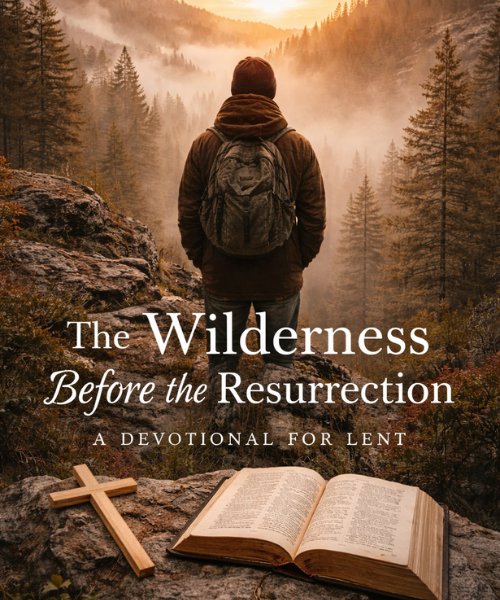
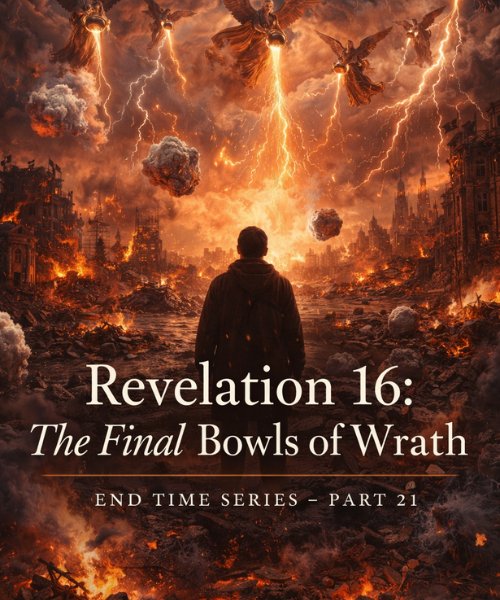
End Times Series – Part 21: Revelation 16 – The Final Bowls of Wrath and the Exposure of a Hardened World
Introduction
Revelation 16 is the point of no return. Earlier chapters (seals, trumpets, and warnings) reveal God’s patience and repeated calls to repentance. Now the warnings have been exhausted, and God’s final justice is poured out on a world that has continually resisted Him.
This chapter emphasizes two realities:
-
God’s judgment is righteous, deliberate, and complete.
-
Human rebellion is fully exposed. Hearts that have hardened against God are revealed in their choices.
This is not chaos. This is divine order. The bowls of wrath are the final, measured, righteous response to sin.
1. The Command from the Temple
Revelation 16:1 WEB
“I heard a loud voice out of the temple, saying to the seven angels, “Go and pour out the seven bowls of the wrath of God on the earth!”’”
The command originates from the temple – the place of holiness and covenant authority. This is deliberate, not impulsive. The bowls of wrath are not arbitrary punishment; they are the righteous execution of God’s justice.
The “temple” imagery reminds us that God acts in accordance with His covenant and holiness. Judgment flows from His character, not human emotion or revenge.
2. The First Bowl: Affliction on Those Who Took the Mark
Revelation 16:2 WEB
“The first went, and poured out his bowl into the earth, and it became a harmful and painful sore on the people who had the mark of the beast, and who worshiped his image.”
The first bowl targets the specific group who aligned themselves with the beast – those who accepted its mark (Revelation 13:16–17). This is symbolic of loyalty: allegiance to Satan’s system results in consequences.
Kingdom perspective: Obedience to God or allegiance to the world always shows its outcome. Here, rebellion and idolatry are exposed physically and spiritually.
3. The Second and Third Bowls: The Sea and Rivers Turn to Blood
Revelation 16:3 WEB
“The second angel poured out his bowl into the sea, and it became blood as of a dead man. Every living thing in the sea died.”
Revelation 16:4–7 WEB
“The third poured out his bowl into the rivers and springs of water, and they became blood. I heard the angel of the waters saying, “You are righteous, who are and who were, O Holy One, because you have judged these things. For they poured out the blood of saints and prophets, and you have given them blood to drink. They deserve this.”
I heard the altar saying, “Yes, Lord God, the Almighty, true and righteous are your judgments.”These judgments mirror Egypt’s plagues (Exodus 7–12). The sea and freshwater bodies become blood, affecting all life. The angel and altar’s voices explain that the judgment corresponds to the sin: persecutors of God’s people now drink what they inflicted.
Kingdom perspective: God’s justice is proportional. The bowls show that rebellion and oppression have consequences, and His righteousness is revealed in the measure of the judgment. Mercy has been extended; now accountability is executed.
4. The Fourth Bowl: Scorching Heat
Revelation 16:8–9 WEB
“The fourth poured out his bowl on the sun, and it was given to him to scorch men with fire. People were scorched with great heat, and people blasphemed the name of God who has the power over these plagues. They didn’t repent and give him glory.”
This shows spiritual stubbornness in the face of suffering. Even under intense heat and danger, people refuse to turn to God. Their hardened hearts are fully revealed.
Kingdom perspective: Physical judgment exposes spiritual reality. God allows consequences to reveal true allegiance. Those who reject Him consistently are hardened further by their own rebellion.
5. The Fifth Bowl: Darkness Over the Beast’s Kingdom
Revelation 16:10–11 WEB
“The fifth poured out his bowl on the throne of the beast, and his kingdom was darkened. They gnawed their tongues because of the pain, and they blasphemed the God of heaven because of their pains and their sores. They still didn’t repent of their works.”
Judgment comes to the seat of power. The darkness is symbolic: the beast’s authority is exposed as powerless before God. Yet humanity’s response is not humility – they curse God instead.
Kingdom perspective: Darkness and suffering reveal the futility of worldly power when opposed to God. Those who rely on the world for security and control will ultimately find nothing there.
6. The Sixth Bowl: Preparing for the Final Conflict
Revelation 16:12 WEB
“The sixth poured out his bowl on the great river, the Euphrates. Its water was dried up, that the way might be prepared for the kings that come from the sunrise.”
Revelation 16:13–14 WEB
“I saw coming out of the mouth of the dragon, and out of the mouth of the beast, and out of the mouth of the false prophet, three unclean spirits, something like frogs; for they are spirits of demons, performing signs, which go out to the kings of the whole inhabited earth, to gather them together for the war of that great day of God the Almighty.”
Revelation 16:15–16 WEB “Behold, I come like a thief. Blessed is he who watches, and keeps his clothes, so that he doesn’t walk naked, and they see his shame.” He gathered them together into the place which is called in Hebrew, “Harmagedon”. This bowl prepares the stage for the final, physical confrontation. The drying of the Euphrates River, a major geographical and military barrier in the ancient world, symbolizes the removal of all obstacles for the world’s armies to gather. This gathering is not a human initiative; it is orchestrated by a trinity of demonic spirits emanating from the dragon (Satan), the beast (the Antichrist), and the false prophet. These spirits perform deceptive signs to rally the world’s leaders against God. In the middle of this prophetic scene, Jesus interjects a personal warning and blessing (v. 15). It’s a call to believers to remain spiritually alert and “clothed” in righteousness, ready for His unexpected return. This is not a time for spiritual slumber but for vigilance. The destination for this demonic gathering is Armageddon (Har-Magedon), which means “Mount of Megiddo,” a historic site of many decisive battles in Israel. Kingdom perspective: The ultimate battle is not between nations, but between God and the forces of evil. Satan’s final strategy is mass deception, using counterfeit miracles to unite the world in rebellion. God, in His sovereignty, allows this gathering to bring His judgment upon all who oppose Him in one final, decisive event.7. The Seventh Bowl: It Is Done!
Revelation 16:17–21 WEB “The seventh poured out his bowl into the air. A loud voice came out of the temple of heaven, from the throne, saying, “It is done!” There were lightnings, sounds, and thunders; and there was a great earthquake such as has not happened since there were men on the earth—so great an earthquake and so mighty. The great city was divided into three parts, and the cities of the nations fell. Babylon the great was remembered in the sight of God, to give to her the cup of the wine of the fierceness of his wrath. Every island fled away, and the mountains were not found. Great hailstones, about the weight of a talent, came down out of the sky on people. People blasphemed God because of the plague of the hail, for this plague was exceedingly severe.” The seventh and final bowl is poured into the air, affecting the entire globe. The declaration from God’s throne, “It is done!” signifies the completion of His wrath described in this chapter. This is the climax of judgment. The effects are cataclysmic and final:- An earthquake of unprecedented magnitude shatters the world’s infrastructure. “The great city” (likely representing the world’s unified political and religious system headquartered in Babylon) is split, and all “cities of the nations” fall.
- “Babylon the great,” the symbol of humanity’s organized rebellion, pride, and idolatry, receives its full, deserved punishment.
- The very geography of the earth is undone as islands and mountains disappear.
- Massive hailstones, weighing up to 100 pounds (a talent), bring utter devastation.
Conclusion: A Sobering Call to Readiness
Revelation 16 is one of the most sobering chapters in the Bible. It reveals the tragic end of a world that has definitively rejected God’s mercy. The bowls of wrath are not the actions of a capricious tyrant, but the just and methodical response of a holy God to persistent, high-handed sin. The chapter’s most chilling refrain is humanity’s response: “They didn’t repent.” Pain, suffering, and undeniable supernatural events do not soften hearts that are set on rebellion; they only harden them further. This chapter serves as a stark confirmation that judgment does not produce repentance; it reveals the heart’s true allegiance. For the believer, this is not a cause for fear, but for sobriety and urgency. Jesus’s warning in the midst of the chaos is for us: “Behold, I come like a thief. Blessed is he who watches, and keeps his clothes.” Our response to the coming judgment should be to live in a state of constant readiness, clothed in the righteousness of Christ, holding loosely to this world and clinging tightly to our eternal hope. Let this chapter fuel our worship for the God who is “true and righteous” in all His judgments, and let it ignite our passion to share the good news of His mercy while there is still time.
If you have been blessed by this issue of Kingdom Living Insights, please share it with others. Many thanks. God bless you!
Pin it!
Find more Kingdom Living Insights issues here

Welcome to Wisdom From Heaven, my Kingdom-focused online ministry rooted in Scripture.
My mission is to help you and your family live faithfully in God’s Kingdom through devotionals, Christian creative resources, expressive & therapeutic arts, the classics, Kingdom Ministry training, Christian online income ideas, and creation wonders. Through these devotional-style resources, I support your spiritual growth and provide guidance for Kingdom living in areas such as health and wellness, work, finances, relationships, marriage, family life, and parenting – always in alignment with the Word of God.
I’m a disciple and servant of Jesus Christ (Prophetic and Pastoral Scribe) sharing the Gospel online. I’m also a wife, mom, teacher, author, Christian Life Coach, Creative Entrepreneur, and Online Business Coach.
ABOUT OUR MINISTRY
We are a non-denominational Bible-believing Christian Ministry trained and equipped at the Christian Leaders Institute and Axx Bible College. Even though our Ministry is based on God's Word, the Bible, you need to approach our teachings like the Bereans and always study the Bible yourself to see if what we teach is aligned with what is written in the Bible.
Now the Berean Jews were of more noble character than those in Thessalonica, for they received the message with great eagerness and examined the Scriptures every day to see if what Paul said was true. Acts 17:11 NIV
We are only humans who 'stumble in many ways' (James 3:2) and we only 'know in part and we prophesy in part' (1 Corinthians 13:9).
LEGAL DISCLAIMER
The content provided on this blog is for educational and informational purposes only. The blog owner, Janet Giessl, also known under her anointed pen name Janetta Setherah, is a Certified Christian Life Coach and Ordained Minister with the Christian Leaders Alliance and holds degrees in Education and Christian Leadership, along with credentials in Bible, Ministry, Philosophy, and Theology. However, Janet is not a medical doctor, licensed therapist or health care professional. The information presented on this platform is not intended to treat, cure, diagnose, or prevent any disease. It is essential to understand that the content offered here is not a substitute for professional advice, whether medical, legal, financial, or from any other professional field.
Spiritual matters and personal well-being are deeply personal and can have profound effects on individuals. We strongly recommend seeking guidance from qualified professionals and prayerfully considering your own circumstances when making significant decisions in your life. The content on this blog is meant to offer insights and inspiration based on biblical principles, but it is not a replacement for professional assistance or personalized advice.
Always consult with appropriate professionals for your specific needs and circumstances.
NOTICE OF COPYRIGHT FOR QUOTING BIBLE VERSES FROM ESV
Scripture quotations are from the ESV® Bible (The Holy Bible, English Standard Version®), © 2001 by Crossway, a publishing ministry of Good News Publishers. ESV Text Edition: 2025. The ESV text may not be quoted in any publication made available to the public by a Creative Commons license. The ESV may not be translated in whole or in part into any other language. Used by permission. All rights reserved.
NOTICE OF COPYRIGHT FOR QUOTING BIBLE VERSES FROM WEB
The World English Bible (WEB) is a Public Domain (no copyright) Modern English translation of the Holy Bible. That means that you may freely copy it in any form, including electronic and print formats. The World English Bible is based on the American Standard Version of the Holy Bible first published in 1901, the Biblia Hebraica Stutgartensa Old Testament, and the Greek Majority Text New Testament. It is in draft form, and currently being edited for accuracy and readability.
