Bible Passages
1 Corinthians 15:3–8 (WEB)
For I delivered to you first of all that which I also received: that Christ died for our sins according to the Scriptures, that he was buried, that he was raised on the third day according to the Scriptures, and that he appeared to Cephas, then to the twelve. Then he appeared to over five hundred brothers at once, most of whom remain until now, but some have also fallen asleep. Then he appeared to James, then to all the apostles, and last of all, as to the child born at the wrong time, he appeared to me also.
Matthew 28:18–20 (WEB)
Jesus came to them and spoke to them, saying, “All authority has been given to me in heaven and on earth. Therefore go and make disciples of all nations, baptizing them in the name of the Father and of the Son and of the Holy Spirit, teaching them to observe all things that I commanded you. Behold, I am with you always, even to the end of the age.”
Acts 1:9–11 (WEB)
When he had said these things, as they were looking, he was taken up, and a cloud received him out of their sight. While they were looking steadfastly into the sky as he went, behold, two men stood by them in white clothing, who also said, “You men of Galilee, why do you stand looking into the sky? This Jesus, who was received up from you into the sky, will come back in the same way as you saw him going into the sky.”
What Is Easter Monday?
Easter Monday is the day after the resurrection – the first full day of living in the reality of what Sunday accomplished. The Gospels do not record a specific event on this day the way they do for the days of Holy Week. But the post-resurrection period as a whole – the forty days between the resurrection and the ascension – is a significant and often overlooked part of the story. During those forty days Jesus appeared repeatedly to His disciples and to others, eating with them, teaching them, and preparing them for what was coming. Easter Monday is a fitting day to step back, look at the full picture of Holy Week, and then walk through those appearances – because they are some of the most personal and important moments in the entire Gospel story.
Devotional
Holy Week began with a crowd waving palm branches on a dusty road into Jerusalem.
It ended with an empty tomb in a garden.
In between those two moments everything changed. Jesus rode into Jerusalem on a donkey fulfilling a prophecy written five hundred years earlier. He cursed a fig tree that was a picture of religious emptiness and cleansed a Temple that had stopped serving the people it was built for. He was challenged by religious leaders whose questions were not honest and who could not answer His question in return. A woman broke an alabaster jar of perfume worth a year’s wages and poured it over Him. One of His own twelve went to His enemies and agreed to hand Him over for thirty pieces of silver.
He washed His disciples’ feet. He broke bread and passed a cup and said this is my body, this is my blood. He gave them a new commandment to love one another the way He had loved them. He prayed in agony in a garden while His disciples slept. He was arrested, tried, beaten, mocked, and crucified. He forgave the people killing Him. He received a dying criminal into His Kingdom. He commended His mother to the care of His closest disciple. He cried out in the darkness. He said it is finished. He gave up His spirit. The Temple veil was torn from top to bottom. He was buried in a borrowed tomb before the Sabbath began.
And then on the first day of the week, before dawn, the stone was rolled away and the tomb was empty.
This is what the entire Christian faith stands on. Not a philosophy. Not a set of moral teachings. Not a religious system. A historical event – the bodily resurrection of Jesus Christ from the dead.
Paul understood this clearly. He wrote to the Corinthians that if Christ has not been raised their faith is worthless and they are still in their sins. The resurrection is not optional or symbolic. It is the event that validates everything Jesus said and everything He did. It is the proof that the cross accomplished what Jesus said it accomplished – that sin’s debt was fully paid, that death had been defeated, and that the life He promised to those who believe in Him is real.
After the resurrection Jesus did not immediately ascend to the Father. He spent forty days appearing to His disciples and others – eating with them, talking with them, opening the Scriptures to them, and preparing them for the mission He was about to give them.
He appeared first to Mary Magdalene in the garden, calling her by name. She was the first witness of the resurrection – a woman, in a culture that did not consider a woman’s testimony legally valid. Jesus chose her first.
He appeared to the two disciples on the road to Emmaus that same afternoon, walking with them unrecognized, explaining the Scriptures, and making Himself known in the breaking of bread.
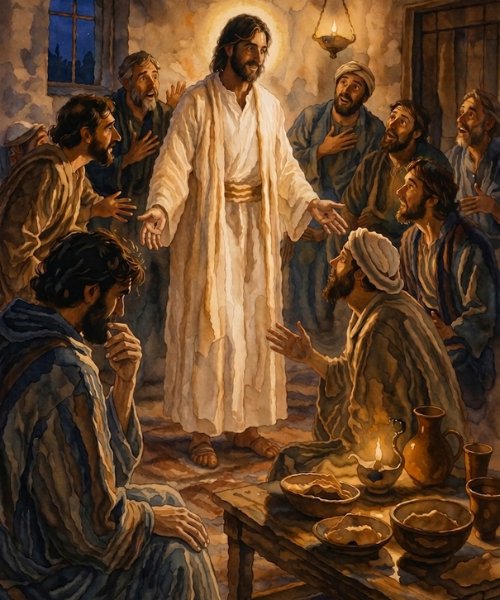
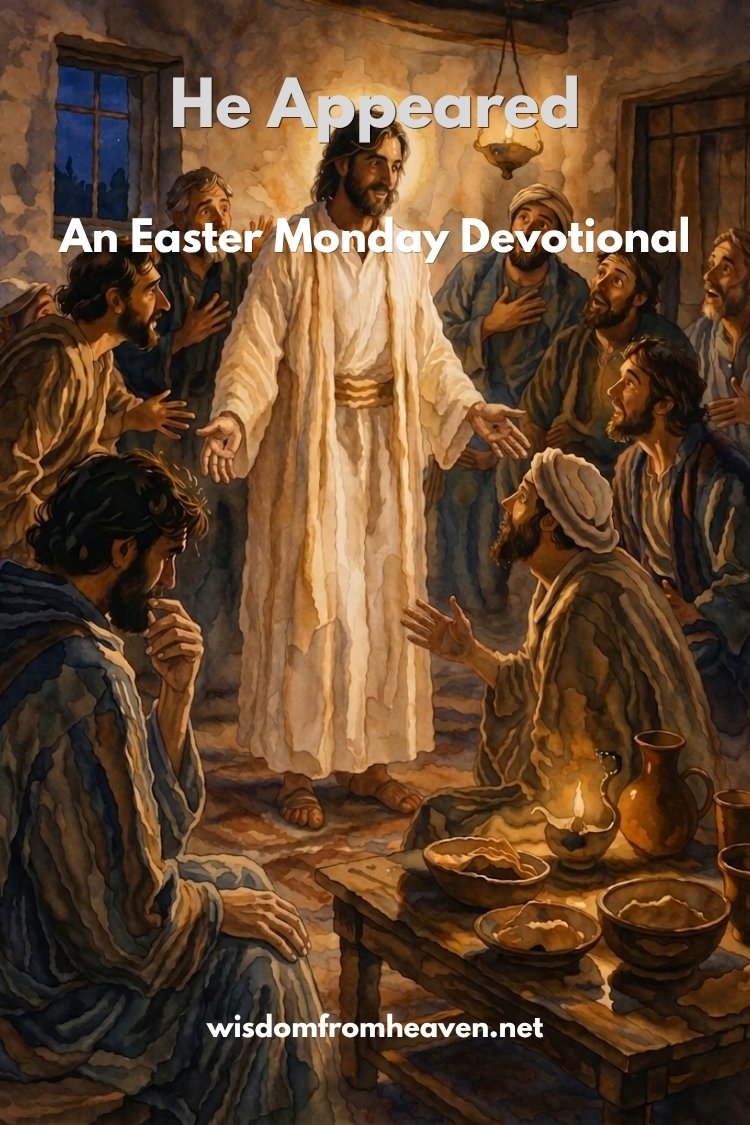
He appeared to the disciples that evening in the upper room behind locked doors, showing them His hands and His side and saying peace be with you.
He appeared to Thomas eight days later, going directly to the one who had said he would not believe unless he saw the nail prints with his own eyes. He did not rebuke Thomas for his doubt. He gave him what he needed.
He appeared to seven disciples by the Sea of Galilee while they were fishing – a night of catching nothing followed by a miraculous catch at His word. He had a fire burning on the shore and fish cooking when they arrived. He ate with them. And then He took Peter aside, the one who had denied Him three times, and three times asked him: “Do you love me?” Three times He restored him. Three times He gave him a commission: feed my sheep.
Paul records that He appeared to more than five hundred people at one time, most of whom were still alive when Paul was writing, meaning they could be questioned and their testimony verified. He appeared to James, His brother, who had not believed in Him during His ministry and who became a leader of the Jerusalem church after the resurrection. He appeared to Paul himself on the road to Damascus, the last recorded appearance, to a man who had been actively persecuting the church, and that encounter changed the entire direction of Paul’s life.
These were not visions or spiritual experiences. They were physical appearances. Jesus ate food. He was touched. He showed His wounds. He spoke. He was recognized by people who had known Him. The resurrection was bodily and real.
Before He ascended Jesus gathered His disciples on a mountain in Galilee and gave them their commission. “All authority has been given to me in heaven and on earth. Therefore go and make disciples of all nations, baptizing them in the name of the Father and of the Son and of the Holy Spirit, teaching them to observe all things that I commanded you. Behold, I am with you always, even to the end of the age.”
Then He was taken up and a cloud received Him out of their sight. Two angels stood beside the disciples and said: “This Jesus, who was received up from you into the sky, will come back in the same way as you saw him going into the sky.”
He is coming back. The same Jesus who rode into Jerusalem on a donkey, who wept over the city, who washed His disciples’ feet, who was crucified and buried and rose again and appeared to hundreds of people over forty days – He is coming back. Holy Week is not just a story about the past. It is the foundation for a future that is still unfolding.
Easter Monday is the day to carry everything forward. The cross is behind us. The empty tomb is behind us. The risen Jesus has appeared, commissioned His disciples, and ascended to the Father. Now the same Spirit He breathed on His disciples in the upper room lives in every believer. The same commission He gave on that mountain in Galilee belongs to every follower of Jesus in every generation.
Holy Week does not end on Easter Monday. It sends us out.
Reflection Questions
- Looking back over the full arc of Holy Week – from Palm Sunday to Easter Sunday – what moment or truth has stayed with you most? What has this week shown you about Jesus that you had not seen as clearly before?
- Jesus appeared repeatedly after the resurrection to people who had doubted, denied, and abandoned Him, and in every appearance His posture toward them was restoration, not condemnation. What does this tell you about how He approaches you?
- The post-resurrection appearances were physical and verifiable – Jesus ate, was touched, showed His wounds, and was seen by hundreds of people. How does the physical reality of the resurrection strengthen your faith?
- Jesus restored Peter specifically, the one who had failed most publicly, and gave him a commission to feed His sheep. Is there an area of failure or denial in your own life that you need to bring to Jesus for restoration?
- The Great Commission belongs to every believer in every generation. What does it look like for you specifically to go and make disciples in the context of your own life, relationships, and calling?
Prayer
Lord Jesus, we have walked through Holy Week with You. We have stood on the road into Jerusalem, in the Temple courts, in the upper room, at the foot of the cross, and at the empty tomb. We have seen You in Your humility and Your grief, in Your anger at religious emptiness, in Your sacrifice and Your suffering, and in Your resurrection. You are not who the crowd expected. You are so much more. You are the King who came on a donkey, the servant who knelt with a towel and a basin, the Lamb whose blood sealed a new covenant, the one who said it is finished and meant every word of it, and the risen Lord who called Mary by name and restored Peter by the shore and appeared to hundreds of witnesses and ascended in glory and is coming again.
We love You – not because our love is worthy of You, but because You loved us first with a love that has no limit and no end. A love that went to the cross. A love that rose from the dead. A love that appears to the doubting and the grieving and the fearful and the failed and says peace be with you.
Send us out from this Holy Week changed. Not just informed but transformed. Not just moved by the story but living differently because of it. You have given us a commission. Give us the courage and the faithfulness to carry it. And come quickly, Lord Jesus. Amen.